nutritioncalories
Beyond the Crust: Why Your Favorite Chicken Pot Pie Needs a Photo Calorie Counter
7 min read
Nommie Team
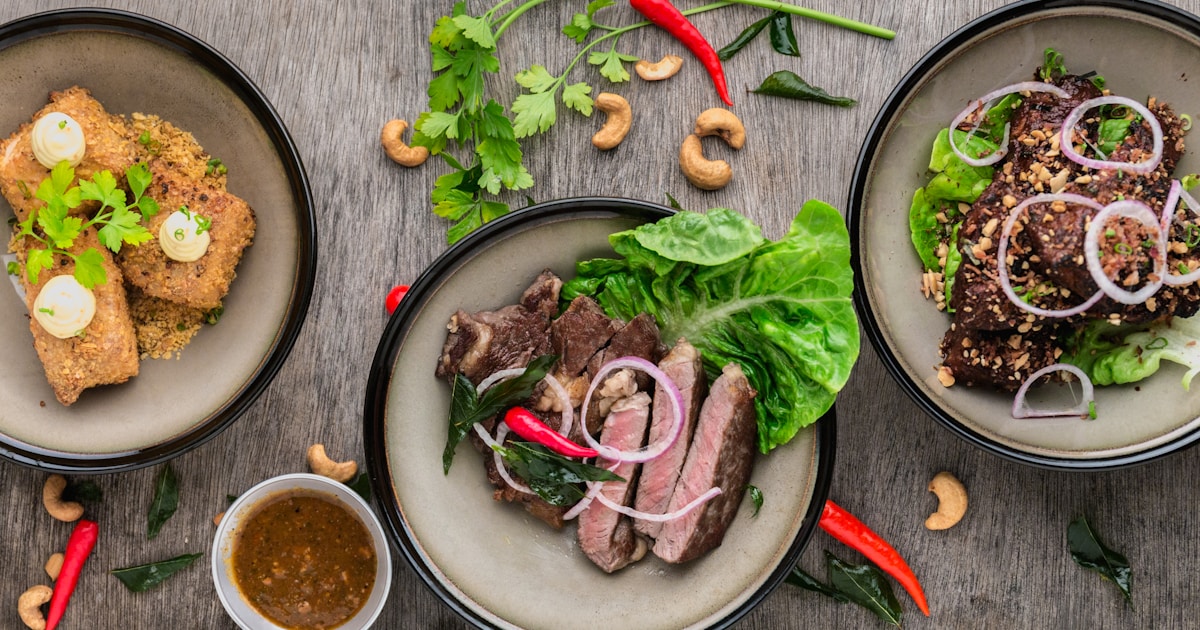
Recently, a popular food publication highlighted some of the best Steak Oscar dishes from restaurant chains. For many, Steak Oscar is a delightful indulgence – tender steak, succulent crab meat, crisp asparagus, all crowned with a rich béarnaise sauce. It’s a symphony of flavors and textures. But for an AI calorie counter, it presents a fascinating and complex challenge.
At Nommie, our mission is to make nutrition tracking effortless and accurate. This means tackling the real-world complexities of what people eat, not just simple, single-ingredient foods. When we see a dish like Steak Oscar, our product and engineering teams don't just see a meal; we see a multi-layered problem to solve.
Imagine trying to manually log every component of a Steak Oscar. You’d need to estimate the weight of the steak, identify its cut, account for any cooking oils, then estimate the crab meat, the asparagus, and most critically, the béarnaise sauce. Béarnaise, a classic emulsion of butter, egg yolks, white wine vinegar, and tarragon, is delicious but calorie-dense. Each of these elements has its own nutritional profile, and their proportions can vary wildly from one restaurant to another, or even from plate to plate within the same restaurant.
This is where the limitations of traditional calorie counting become apparent. Relying on generic database entries for "Steak Oscar" can be wildly inaccurate. How much béarnaise did your plate have? Was the steak a lean sirloin or a fattier ribeye? These nuances significantly impact the total calorie and macro count. This is precisely the kind of scenario that makes building a reliable photo calorie counter so challenging and rewarding.
When a user uploads a photo of their meal to Nommie, our AI doesn't just "see" a picture. It initiates a sophisticated multi-stage process designed to break down the meal into its constituent parts and estimate their nutritional values.
The complexity of a dish like Steak Oscar highlights why a simple "point and shoot" approach isn't enough for accurate calorie counter image recognition. We're constantly refining our algorithms to handle variations in presentation, lighting, and ingredient combinations.
While our AI is powerful, it's not a mind-reader. It excels at pattern recognition, but it thrives on context. For highly ambiguous or complex meals, Nommie is designed to ask clarifying questions. Did you add extra butter? Was that a side of fries or a salad? This interactive feedback loop is crucial. Every piece of information a user provides helps the AI refine its understanding of that specific meal and, over time, improves its overall accuracy for everyone.
This collaborative approach between user and AI is what sets advanced food photo diary app experiences apart. It's not just about the AI doing all the work; it's about the AI intelligently guiding the user to provide the minimal necessary information for maximum accuracy.
Even with sophisticated AI, tracking restaurant meals can be tricky. Here are some practical tips to help you get the most accurate results:
Our goal with Nommie is to simplify the often tedious process of nutrition tracking. We understand that life happens, and not every meal is a perfectly portioned, single-ingredient dish. By leveraging advanced AI and machine learning, we aim to provide an intuitive and accurate AI food recognition app that adapts to your real-world eating habits.
We believe that understanding how you eat shouldn't feel like a chore. By continuously improving our AI's ability to interpret complex meals, we empower users to make informed decisions about their nutrition without sacrificing the joy of eating out or enjoying a decadent dish like Steak Oscar. Our focus is on making the technology work harder so you don't have to, providing a seamless experience that helps you stay on track with your health and wellness goals.
Sources:
Share this post
7 min read
6 min read
6 min read